01
loopholes
plural nounGaps in rules that let people avoid their intended limits.
TRY IT IN A SENTENCE
The new policy closes loopholes that allowed hidden service charges.
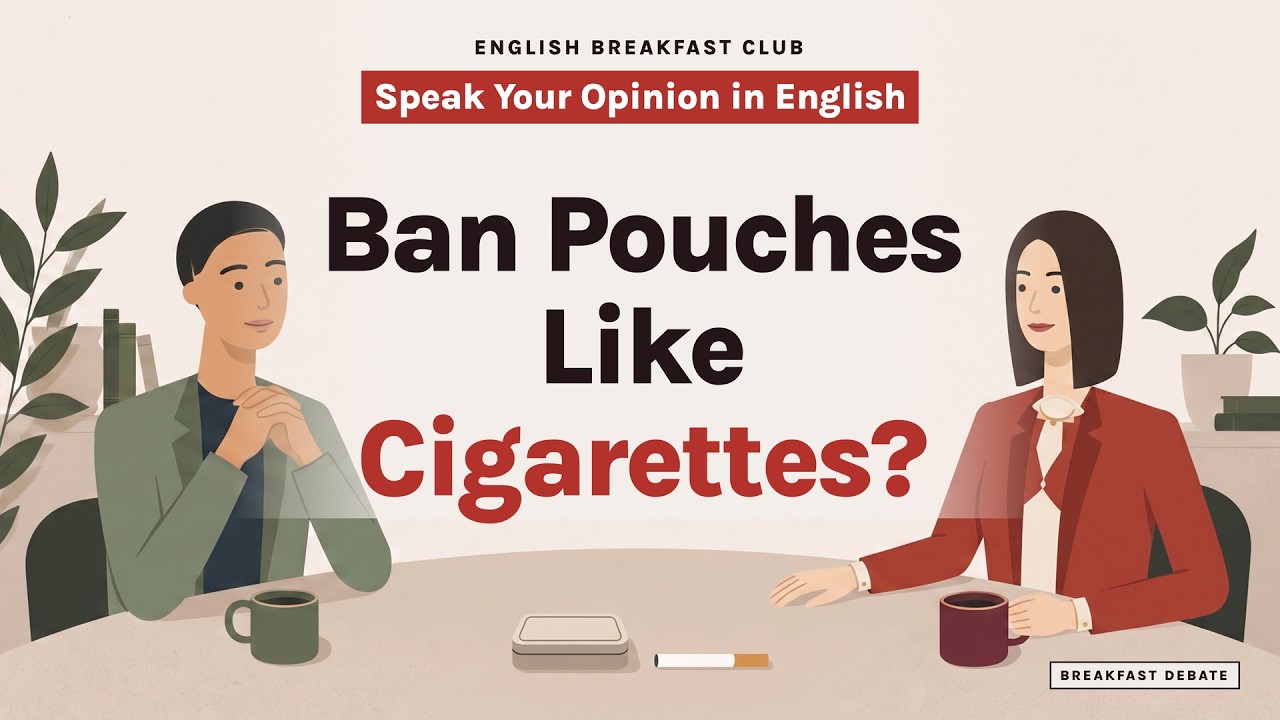
Hear both sides of a public-health debate, then practise acknowledging a fair point before making your own argument.
Press play to load YouTube’s video player. Or watch on YouTube ↗
From the episode, with fresh examples to help you use them. Save words on this device, then revisit them in your saved words.
Gaps in rules that let people avoid their intended limits.
The new policy closes loopholes that allowed hidden service charges.
The process of burning a substance.
The science class compared combustion with other chemical reactions.
People who are nearby but are not directly involved.
The police asked bystanders whether they had seen the accident.
Something that encourages a person to take a particular action.
A travel discount gives commuters an incentive to use the train.
Appropriate in size or strength for the situation.
The response should be proportionate to the seriousness of the mistake.
Equal treatment, value or status.
The staff asked for pay parity across the two offices.
A way to introduce your main point clearly and without delay.
YOUR TURN To look at this directly, our current timetable leaves no room for mistakes.
A way to draw attention to the risk you consider most important.
YOUR TURN What should concern us most is that some pupils cannot access the lessons.
A way to accept part of an argument before challenging its conclusion.
YOUR TURN That observation is certainly true, but a smaller trial could still be useful.
Without discouraging people or making them lose interest.
YOUR TURN We need clearer rules without putting off new volunteers.
Complete narration from the episode. Number spelling follows the spoken script.
DavidMajor tobacco manufacturers have expanded sponsorship of music festivals and sports events to promote nicotine pouches. That marketing push began because tobacco companies are racing to sign up loyal customers before new restrictions arrive. Health advocates demand full cigarette bans, while opponents say equal rules will discourage smokers from switching. Should nicotine pouches face cigarette-style bans? Which side are you on: ban pouch promotion everywhere, or keep lighter rules to help smokers quit?
DavidNicotine pouches are small flavoured sachets placed between the lip and gum. They release nicotine into the bloodstream without burning any tobacco. UK pouch sales reached an estimated three hundred and eighty-four million pounds in twenty twenty-five. That compares with nearly twelve billion pounds spent on traditional cigarettes. Now ministers are advancing plans for a smokefree generation. Tom, should governments apply the exact same strict bans to nicotine pouches?
TomTo look at this directly, tobacco giants are using festivals to hook new young customers. Brands like Nordic Spirit, Zyn, and Velo sponsor music stages and sports events. They know pouch users develop strong brand loyalty very quickly. So companies are rushing to recruit buyers before legal advertising bans take effect. Rising pouch revenues have already lifted the stock market valuations of major tobacco firms. What should concern us most is that nicotine is a powerful, highly addictive drug. Medical research confirms nicotine damages developing brains and creates long-term cardiovascular risks. Those clear health dangers easily outweigh any claimed daily focus or wellness benefits. Without cigarette-level bans, we will simply allow a new wave of youth addiction.
DavidTom argues that aggressive marketing exploits legal loopholes to hook young people on addictive nicotine. He believes equal bans are necessary to prevent serious long-term health harms. Emily, how do you see the case against equal regulation?
EmilyTreating pouches like cigarettes ignores the vital difference between burning tobacco and smokeless nicotine. Combustion produces toxic smoke, but oral pouches deliver nicotine without burning anything. The UK government itself proposed simple white packaging specifically to preserve adult switching. Ministers designed those rules to deter children without putting off smokers who want to quit. Under the smokefree generation plan, helping current smokers switch remains an essential public goal. Furthermore, indoor smoking bans exist to eliminate dangerous secondhand smoke for bystanders. Because pouches produce no smoke or vapour, they create zero passive risk for other people. Applying identical public bans removes the main incentive for smokers to choose cleaner alternatives.
DavidEmily argues that pouches do not produce harmful secondhand smoke and help smokers quit. She warns that identical bans could weaken the government's wider smokefree goals. Tom, how do you respond to Emily's argument?
TomThat observation is certainly true, but partial rules always leave dangerous commercial loopholes. I agree that pouches eliminate combustion and can assist smokers who want to quit. However, public health policy only succeeds when statutory baselines are completely uniform and clear. When Scotland introduced its strict indoor smoking ban, secondhand smoke fell by ninety-six percent. That dramatic success happened because the statutory standard applied everywhere without confusing exemptions. The UK is now banning tobacco sales for anyone born in twenty-nine or later. If pouches escape equal controls, tobacco firms will simply shift youth marketing to smokeless products.
DavidTom points to Scotland's smoking ban to prove that clear, uniform laws deliver decisive results. He insists equal standards are essential to protect the smokefree generation policy. Emily, your rebuttal.
EmilyAggressive festival marketing is a fair concern, but full parity is the wrong tool. Tobacco companies certainly exploited marketing gaps at music events to build early brand loyalty. Yet heavy-handed parity penalises a small three hundred and eighty-four million pound market. That emerging sector is tiny compared to the eleven billion pound traditional cigarette trade. Governments can easily stop youth advertising and enforce age limits without banning public adult use. Targeted age checks protect teenagers while keeping safer options available for adult smokers.
DavidToday's debate turns on festival promotions and the rapid rise of nicotine pouches. The core question is whether identical cigarette bans protect teenagers or harm switching smokers. Scotland's indoor smoking ban proved that strict statutory rules reduced secondhand smoke by ninety-six percent. Tom believes that precedent shows why equal rules are necessary to stop corporate marketing. Emily counters that pouches produce no smoke and require separate, proportionate regulation. In six months, watch UK youth pouch uptake alongside adult cigarette smoking quit rates.
DavidNow it's your turn to practise three spoken debate phrases from today's discussion. First, use this frame to open your main point directly. To look at this directly, marketing rules must protect young consumers. To look at this directly, adult smokers need accessible quitting alternatives. To look at this directly, statutory baselines provide essential market certainty. Second, use this frame to highlight a major risk or priority. What should concern us most is that early addiction damages developing brains. What should concern us most is that heavy rules deter switching smokers. What should concern us most is that commercial loopholes invite aggressive marketing. Third, use this frame to grant a fair point before offering your counterargument. That observation is certainly true, but targeted age restrictions solve the problem. That observation is certainly true, but tobacco companies quickly exploit legal gaps. That observation is certainly true, but public health policy demands clear standards. Choose one of these phrases and share your verdict in the comments below. Thank you for watching The Breakfast Debate, and join us again next time.
Take a moment. Try answering out loud — even one sentence is a start.
When two products have different risks, should they follow the same rules? Explain one benefit and one drawback.
Choose the argument you disagree with most. First acknowledge a fair point, then explain your objection.
KEEP YOUR CURIOSITY GOING
 STUDY PACK 01
A five-story morning briefing: Volkswagen, the climate target, US welfare rules, smart rings and British politics. Build the English to talk about a changing world.
 STUDY PACK 02
A five-story news lesson covering AI reasoning, British student loans, China’s currency, space security and gene-edited microbes. Practise explaining complex ideas in plain English.
 STUDY PACK 03
Build a clear answer about ambition, boundaries and the price of getting ahead. Three questions, model answers and phrases you can make your own.