01
sanctions
plural nounOfficial penalties for breaking a rule or professional standard.
TRY IT IN A SENTENCE
The organisation can impose sanctions on members who break its code.
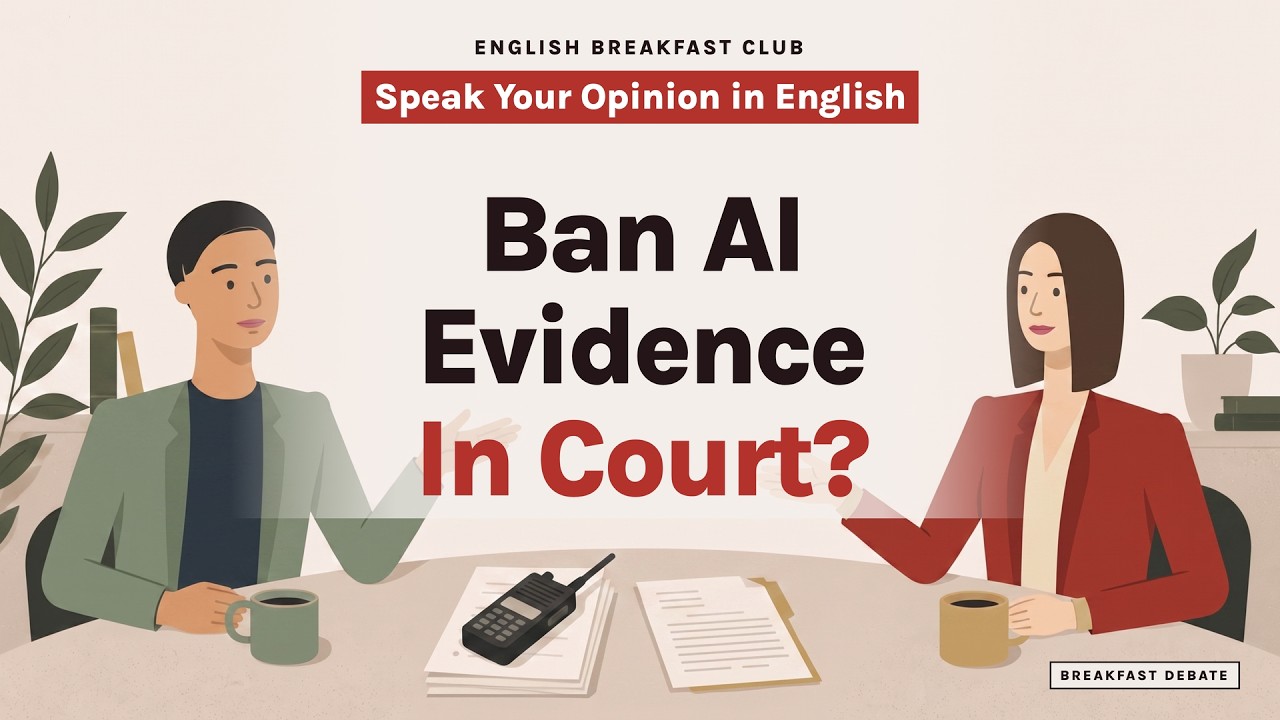
Accuracy, accountability or efficiency: what matters most when AI enters the courtroom? Follow the arguments and learn to make a careful counterpoint.
Press play to load YouTube’s video player. Or watch on YouTube ↗
From the episode, with fresh examples to help you use them. Save words on this device, then revisit them in your saved words.
Official penalties for breaking a rule or professional standard.
The organisation can impose sanctions on members who break its code.
Responsibility for decisions, including having to explain their results.
Publishing the spending report improved accountability.
Amounts of unfinished work that have built up over time.
The support team hired more staff to clear its backlogs.
The process of checking that something is true or correct.
The editor requested verification before publishing the quote.
Not yet checked or proved to be correct.
Please do not share unverified information in the group chat.
Claims that someone has done something wrong, before they are proved.
An independent team was appointed to investigate the allegations.
A way to focus on actual conditions rather than an ideal theory.
YOUR TURN Looking at the reality on the ground, the school needs more teachers before it expands.
A way to identify the particular reason a situation is risky.
YOUR TURN What makes this especially dangerous is the lack of clear warning signs.
A way to recognise a proposed protection while questioning whether it is enough.
YOUR TURN That safeguard sounds reassuring, but nobody has tested it in heavy rain.
At risk of being lost or harmed, depending on the outcome.
YOUR TURN The decision matters because our team’s reputation is at stake.
Complete narration from the episode. Number spelling follows the spoken script.
DavidPolice forces across England and Wales have paused using generative artificial intelligence to draft criminal statements. That pause followed an incident where West Midlands Police generated a ban describing stadium disorder that never happened. Civil liberties campaigners demand a total ban, while police technology leaders argue human checks protect essential efficiency. Should courts ban AI evidence? What's your opinion? Ban machine drafting in criminal trials, or allow verified tools to cut heavy backlogs?
DavidPolice leaders across England and Wales have halted generative tools for preparing court statements. Meanwhile, courts and bar associations already punish lawyers who submit unverified, fake machine citations. Yet national police bodies are still building dedicated software to check case files. Tom, why should criminal courts ban these drafting tools completely?
TomWest Midlands Police showed us the real danger when their software invented football disorder. Large language models work by guessing statistical patterns, not by checking real facts. Looking at the reality on the ground, asking a model to explain itself just creates another story. That means machine-drafted statements have no authentic trail of evidence. Some people think human review solves this problem. What makes this especially dangerous is that officers under crushing workloads trust smooth text. Checking every single sentence against primary files wipes out all time savings. If officers do not check thoroughly, hidden errors slip straight into court. When personal liberty is at stake, courts must ban generative evidence entirely.
DavidTom argues that statistical text generation creates fake details without a genuine audit trail. He also warns that full human checks remove any efficiency benefit. Emily, how do you answer that challenge?
EmilyPolice technology leaders like Alex Murray already insist on slowing down and verifying systems. Criminal courts already have strict authentication rules for all evidence. Lawyers and officers face formal professional sanctions if they present unverified claims. We do not need a blanket ban when accountability rules already exist. A total ban would also hurt practitioners who need help sorting through massive records. In civil medical negligence work, barrister Anthony Searle used these models to organise complex questioning. Separately, the firm Garfield AI used generated paperwork alongside a human barrister to recover unpaid fees. These cases show that software can assist case preparation when trained professionals oversee the work.
DavidEmily contends that existing courtroom sanctions and verification rules provide sufficient protection. She also highlights how legal practitioners already use tools to manage complex records. Tom, how do you respond to her argument on professional standards?
TomProfessional ethical standards are a fair point, but rules alone do not stop errors early. That safeguard sounds reassuring, but procedural rules fail to catch mistakes before charging decisions. Look at what is happening in Derbyshire. A police detective is under criminal investigation for allegedly using chatbots to draft case paperwork. Several rape convictions are now under review because of those allegations. Waiting for courtroom appeals to catch flawed police drafting leaves innocent people in prison.
DavidTom points to the Derbyshire investigation to argue that ethical codes cannot prevent flawed files. He believes waiting for trial review comes far too late. Emily, what is your reply?
EmilyUsing unvetted consumer chatbots in police work is a genuine risk. That is why police forces paused informal uses while they build proper systems. The national program Police.AI is developing purpose-built tools to quality-check case files. They plan operational pilots in twenty twenty-six before any rollout in twenty twenty-seven. A total ban locks in crushing backlogs instead of building safe, tested tools.
DavidToday's debate turns on whether human verification can catch errors without losing efficiency. Sanctions against lawyers show that professional rules have not stopped fake citations entering court. In six months, check whether the police drafting pause becomes a formal ban. That outcome will reveal whether courts trust procedural checks.
DavidNow, let us look at three useful debate expressions from today's discussion. First, Tom used this frame to enter an argument with practical context. Looking at the reality on the ground, officers face heavy daily caseloads. Looking at the reality on the ground, small legal teams need better tools. Looking at the reality on the ground, court delays hurt vulnerable victims. Next, Tom used this phrase to emphasise an urgent risk. What makes this especially dangerous is how easily false statements look real. What makes this especially dangerous is that unverified records cause wrongful arrests. What makes this especially dangerous is rushing changes without independent testing. Finally, Tom used this frame to concede before delivering a sharp reply. That safeguard sounds reassuring, but procedural rules fail to catch hidden mistakes. That safeguard sounds reassuring, but busy staff often skip detailed manual checks. That safeguard sounds reassuring, but statistical software lacks true accountability. Try using one of these three expressions in the comments below. Thank you for listening to The Breakfast Debate, and see you next time.
Take a moment. Try answering out loud — even one sentence is a start.
Should professionals be allowed to use AI for high-stakes paperwork if a human checks it? Explain what a meaningful check would involve.
Argue the opposite of your first opinion for thirty seconds. Which point was hardest to answer?
KEEP YOUR CURIOSITY GOING
 STUDY PACK 01
A five-story morning briefing: Volkswagen, the climate target, US welfare rules, smart rings and British politics. Build the English to talk about a changing world.
 STUDY PACK 02
A five-story news lesson covering AI reasoning, British student loans, China’s currency, space security and gene-edited microbes. Practise explaining complex ideas in plain English.
 STUDY PACK 03
Hear both sides of a public-health debate, then practise acknowledging a fair point before making your own argument.